Album Review: Blood Sucking Maniac's self-titled album
by Austin Krentz
Country Music for decades has been less a genre and more a buzzword. For many people, the phrase is synonymous with Terrible. The most obnoxious, unlistenable music possible written by rich swindlers for fools. For others, it is comfort and home. The songs ceaselessly reference fishing, going to church, and driving big trucks because that is simply life for some people (and larp for others).
When someone says they like Country Music it’s unfortunately easy to assume what type of person they are and what sorts of values they hold (especially when fascist anthems rack up hundreds of millions of listens). This is what happens when a genre becomes less about sound and more about marketing. Similar assumptions are made about people who like Pop, Metal, and Rap but the cultural through-line of those genres is less solid.
It may therefore be strange to hear that I like Country Music. I am forever a hater of lowest-common-denominator slop. But I am a lover of drinking cheap beer and driving down long, straight country roads. I love pedal steel guitar and raspy, untrained voices. I love music by common people, for common people. Whether it be Punk, Folk, or Rock: there are few things I want to listen to more than Three Chords and Truth. This is why one of my most-listened-to albums of all time is Lubbock (On Everything) by Terry Allen (1979).
Terry Allen is one of art’s true enigmas. He is a Country artist turned architect turned professor turned sculptor turned Guggenheim Fellow. His life has taken him from Kansas to Texas to California to New Mexico. His music encompasses not only Country, but also Radio Dramas and Film Soundtracks. His father was a baseball player and his mother a pianist. He is a husband, a father, a grandfather, and a great-grandfather. He is America (and everything).
His first album Juarez (1975) is a Country Opera. A desperate tale of sex, drugs, and murder. A depiction of a type of life that is entirely warts. Lubbock is more holistic. The warts are there but so is plainness, honesty, love, life (everything!). Infidelity and murder are sung about as casually as going to work, eating at a diner, and going on dates. Cheap beer is drank and long, straight roads are driven down. It is satire and diary and parable and pulp and truth (everything!).
Terry Allen’s music is so vast and eternal that it is no wonder that he learned songs from his parents, sang songs with his wife, and taught songs to his children… who then taught them to their children. Thus: Blood Sucking Maniacs (2026). Otherwise known as The Allen Family Band Album. The album features sixteen musicians, ten of them Allens, spanning five (!) generations of family history.
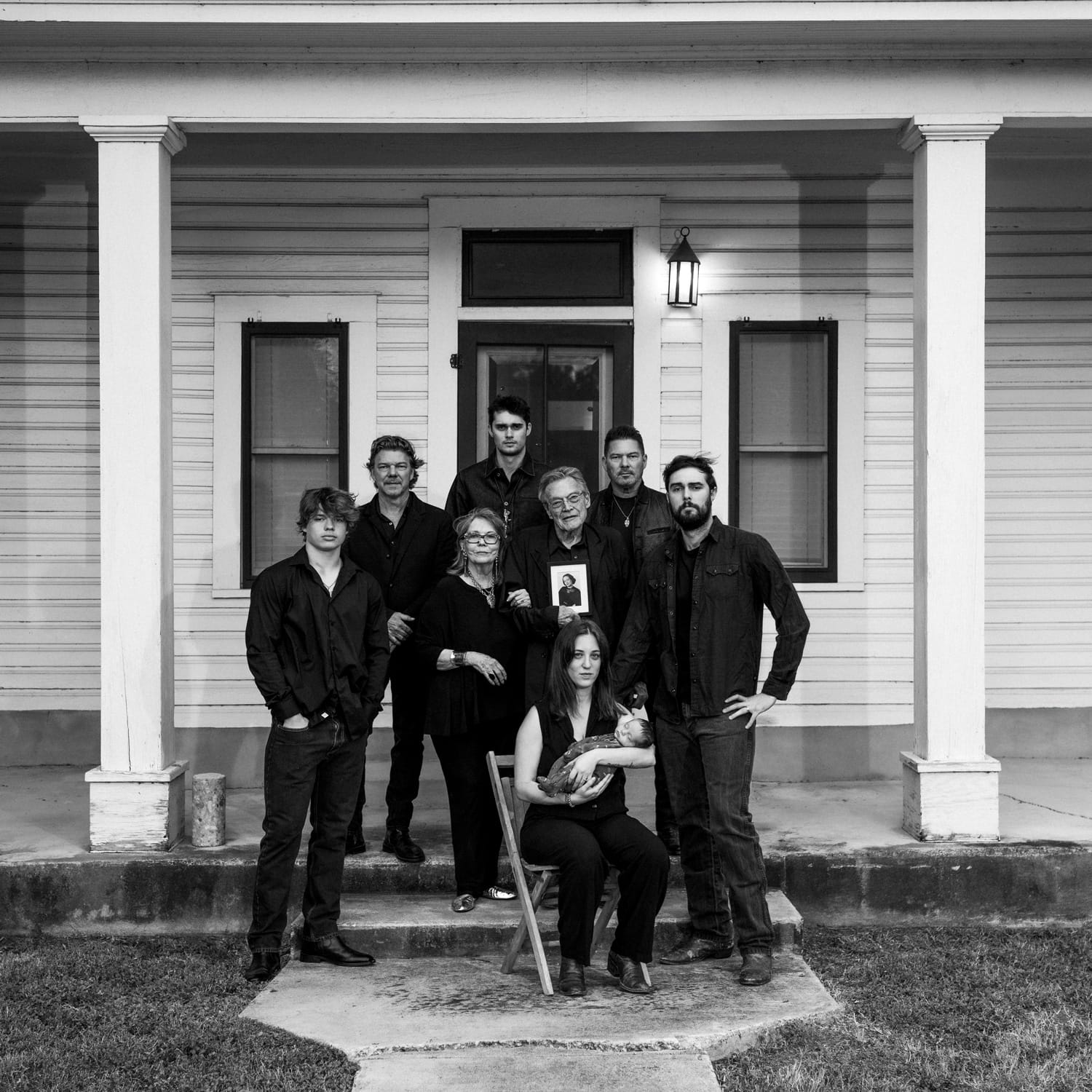
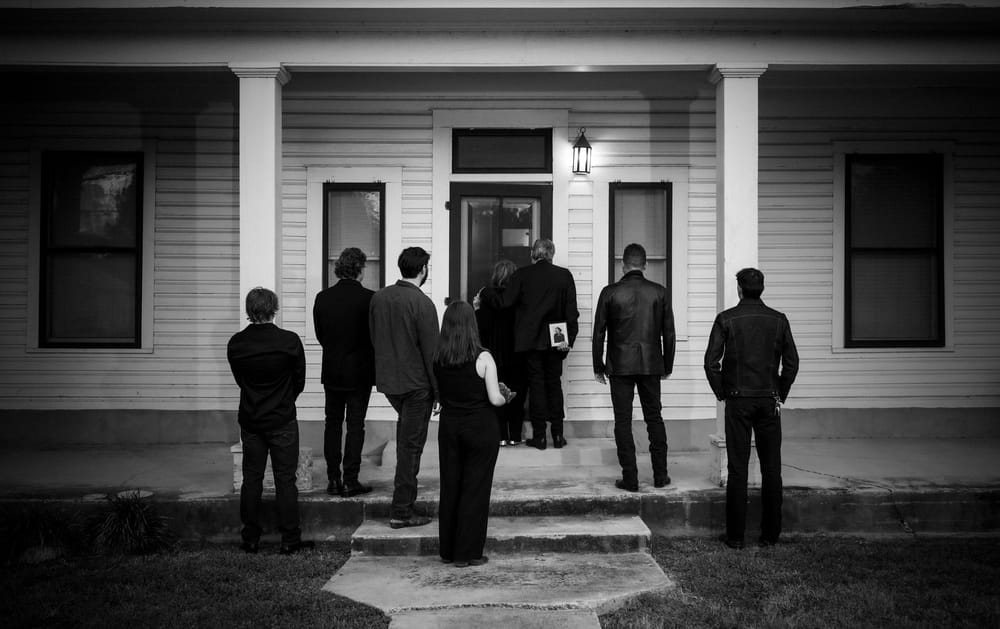
A quick Book of Genesis: Pauline is Terry’s mother. Jo Harvey is Terry’s wife. Jo Harvey and Terry have two sons: Bukka and Bale. Bale has two sons: Sled and Calder. Bukka has one son: Kru. Sled is married to Sophie and they have one son: Lucky Marlo. These Allens are flanked by a number of friends and longtime Allen Family collaborators. Everyone is picking up instruments, singing tunes, and writing lyrics. A wonderful time is had by all.
The album begins with a strange and unassuming track “Heartbeat / Barrelhouse”. 15 seconds of pulsing noise and 25 seconds of old-timey piano. Meaning unclear, purpose unknown. Luckily, the liner notes (written by Allen Family historian Brendan Greaves) tell the complete story. The piano is performed by the long-deceased Pauline Allen; home-recorded on a cassette in the 70s. The pulsing is Lucky Marlo Allen’s fetal heartbeat; who was unborn at the time this album was written. 50 years and five generations spanned in 40 seconds. This is the caliber of album we are dealing with.
“Blood Sucking Maniacs” begins the album proper. An all-hands-on-deck singalong channeling Woody Guthrie and Pete Seeger; proving truth is eternal. This is a song that could have been written 100 years ago but wasn’t. It took generations of mulling and marinating for the sculpture to finally be found within the stone. “Bloodlines, Peaches and Sap”, and “Red Leg Boy” take the opposite approach. These are songs that have existed for decades that are still being sung and reimagined today. Bloodlines incarnate.
Across the album’s 22 tracks there are 11 different songwriters credited. Terry and Jo Harvey contribute to nine of these tracks. Most crucially, they duet on the tender ballad “Down to the River”; an ancient and plodding ode to togetherness. Kru contributes to two tracks (his “Jams”): solo piano improvisations that mirror his great-grandmother Pauline’s piano recordings.
The contributions of the boys Sled, Calder, and Bukka are the most difficult to unpack. This is, confusingly, because they are the most simple and obvious. “Dirt Road” (Sled) and “Just Pray” (Calder) sound identical to vapid Country radio hits or Protestant church band staples when half-listening. These simpler tracks make frequent reference to fishing, praying, driving, and other things expected of the average Country song. This is not to imply these tracks are above-average in any way. In fact, they are somewhat amateurish and tepid - but it’s charming! These are real people making honest attempts at art and they are making them LOUD. Something we all can strive for.
Bale’s sole song is “A Pogo is a Logo”; a raucous bolt of lightning. Two guitars, two drum kits, too much chaos. Rhymes which are fully slant following metaphors which are entirely mixed. The chorus is a simple repetition of the word “and,” and if you say “and” enough times you’ll eventually encompass everything. The track is pure Beefheart, pure genius. A stray masterpiece living among unassuming companions. What then does this track have in common with the surrounding ones? Everything! “Put us in a blender and mix us all up and the color you’ll get is the color of blood” indeed.
The album is often plain; often repeating tropes that have been heard dozens of times before. Yet, the album is endlessly explorable and relistenable. As conceptually deep as it is emotionally rich. The key then to this album is framing. Each musician approaches the album like a pointillist approaches a canvas - the sum total of which cannot be appreciated until you look upon decades of work simultaneously. Mediocrity gets pushed against genius; age against beauty; rubber against road. Family is everything and everything is infinity (warts and all).